


Essential Multi-State Payroll Tax Compliance for Remote Workforces
As remote work becomes increasingly common, businesses face unique challenges regarding tax compliance across different states. Understanding the tax implications for remote employees is crucial for maintaining compliance and avoiding penalties. This article will explore the complexities of multi-state payroll tax, registration requirements, and the benefits of outsourcing payroll services. Additionally, we will discuss how telecommuting tax rules impact business tax obligations and the responsibilities for state income tax withholding. By the end of this guide, you will have a comprehensive understanding of the essential tax considerations for businesses with remote employees.
Unique State Regulations
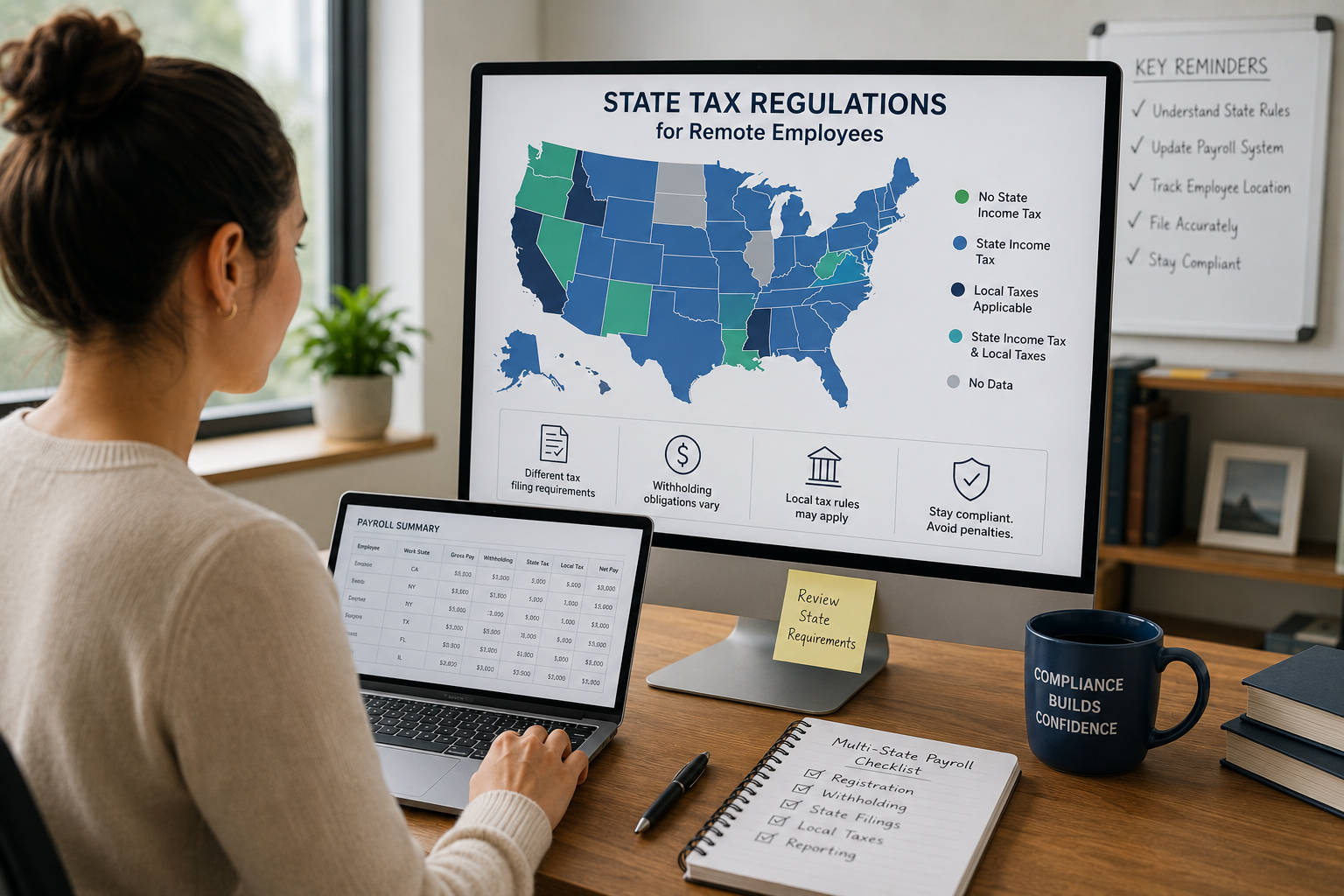
Each state has unique tax rules that businesses must navigate when employing remote workers. Compliance with these regulations is crucial to avoid penalties and ensure smooth operations. Understanding the varying tax regulations across states helps businesses manage their payroll effectively and maintain compliance. This knowledge is essential for businesses that operate in multiple states, as it allows them to adapt their payroll practices to meet specific state requirements.
Registration Requirements
Businesses must register with federal and state tax agencies to process payroll for remote employees. This includes obtaining necessary tax ID numbers and setting up accounts for unemployment insurance. Proper registration ensures that businesses can withhold the correct taxes and comply with state regulations. Failure to register can lead to significant fines and complications in payroll processing.
Payroll Software Limitations
While payroll software can streamline many aspects of payroll management, it cannot replace professional oversight. Errors in payroll processing can lead to compliance issues, making it essential for businesses to have a thorough understanding of their payroll systems. Professional help is necessary for accurate setup and ongoing management, ensuring that all tax obligations are met.
Outsourcing Benefits

Outsourcing payroll services can provide significant advantages for businesses with remote employees. By partnering with a professional payroll provider, businesses can effectively manage compliance with multi-state tax regulations. These providers stay updated on the latest laws and regulations, reducing the risk of errors and penalties. Additionally, outsourcing payroll saves time and allows business owners to focus on core operations.
FJ and Associates PLLC is a professional accounting firm specializing in comprehensive accounting and financial services tailored for small to medium-sized businesses. They offer expertise in multi-state tax compliance, payroll tax management, and telecommuting tax regulations.
CPA Oversight
The importance of CPA oversight in payroll cannot be overstated. Certified Public Accountants (CPAs) verify compliance with tax regulations and monitor for errors in payroll processing. Their expertise ensures timely payments and filings, which are critical for maintaining good standing with tax authorities. Engaging a CPA can provide peace of mind for business owners, knowing that their payroll is being managed correctly.
Avoiding Common Mistakes
Businesses must be aware of common payroll mistakes to avoid costly penalties. Misclassifying employees can lead to significant fines, and filing reports on time is crucial for compliance. Accurate record-keeping is essential to ensure that all tax obligations are met. By understanding these common pitfalls, businesses can implement strategies to avoid them and maintain compliance.
Timely Payroll Processing
Timely payroll processing is vital for maintaining employee satisfaction and compliance with labor laws. Accurate processing helps prevent discrepancies and ensures that employees are paid on time. Regular audits of payroll systems can help identify potential issues before they become significant problems. Businesses must prioritize timely payroll processing to maintain a positive work environment.
Peace of Mind
Outsourcing payroll provides business owners with peace of mind, allowing them to focus on their core operations. By delegating payroll responsibilities to professionals, business owners can reduce stress related to payroll compliance. This approach not only saves time but also ensures that payroll is managed accurately and efficiently.
What Are the Key Multi-State Payroll Tax Compliance Requirements for Remote Workforces?
Understanding state-specific requirements is crucial for businesses with remote employees. Compliance minimizes risks associated with audits and penalties. Regular updates on laws and regulations are necessary to ensure that businesses remain compliant as tax laws evolve.
How Does Multi-State Payroll Tax Affect Businesses with Remote Employees?
Unique payroll tax regulations increase complexity for businesses employing remote workers. The risk of errors can lead to audits, making it essential for businesses to understand their obligations. Correct withholding is crucial to avoid penalties and ensure compliance with state tax laws.
Which States Require Payroll Tax Withholding for Remote Workers?
Each state has different withholding requirements for remote workers. Businesses must register in each state where their employees reside to comply with local tax laws. Understanding these requirements is essential for accurate payroll processing and compliance.
How Do Telecommuting Tax Rules Impact Business Tax Obligations?
Telecommuting creates unique tax obligations for businesses. Understanding these rules is essential for compliance, as they can vary significantly from state to state. Businesses must adapt to changing regulations to ensure they meet their tax obligations.
Beyond income tax, businesses must also consider how remote employees can impact other tax obligations, such as sales and use tax nexus.
Remote Workforce Tax Implications: Withholding & Nexus
businesses with remote workers must also be aware of sales and use tax considerations. The presence of a remote worker in a state may create nexus for sales tax purposes.
State and Local Tax Implications for a Remote Workforce: As Remote Work Becomes More Common, Withholding and Nexus Are among Key Considerations, 2024
What Are the Telecommuting Tax Regulations Businesses Must Follow?
Businesses must comply with state-specific telecommuting tax regulations. Tax obligations can vary based on employee location, making it essential for businesses to stay informed about the latest requirements. Regular updates on regulations are necessary to maintain compliance.
How Can Businesses Manage Tax Nexus Created by Remote Employees?
Understanding state-specific regulations is crucial for managing tax nexus created by remote employees. Businesses should register with state agencies before hiring remote workers to ensure compliance. Utilizing professional payroll services can help navigate these complexities effectively.
This concept is further elaborated by experts who highlight the critical importance of understanding state tax nexus for telecommuting employees.
State Tax Nexus for Telecommuting Employees
surrounding nexus for telecommuting employees front and center for many businesses. Tax now, with state-mandated work at home policies instituted across the country.
State Tax Nexus Related to Work-at-Home and Teleworking Employees, 2019
What Are the State Income Tax Withholding Responsibilities for Remote Employees?
Businesses have specific responsibilities regarding state income tax withholding for remote employees. Identifying employee location is essential for determining tax obligations. Understanding state tax laws and registering with state agencies are critical steps in ensuring compliance.
How to Determine State Income Tax Obligations for Remote Workers?
To determine state income tax obligations, businesses should identify employee locations and research state tax laws. Setting up payroll systems accordingly is essential for accurate withholding and compliance.
What Are Best Practices for Accurate Tax Withholding Compliance?
Best practices for tax compliance include regularly reviewing payroll reports and staying updated on changes in tax laws. Consulting a CPA for guidance can help businesses navigate the complexities of tax withholding and ensure compliance.
Which Tax Credits and Deductions Are Available for Businesses Supporting Remote Work?
Businesses supporting remote work may qualify for various tax credits and deductions. Identifying available tax credits and understanding eligibility requirements is essential for maximizing deductions related to remote work.
Are There Specific Telecommuting Tax Credits for Employers?
Employers may qualify for specific telecommuting tax credits. Understanding eligibility is crucial for businesses looking to take advantage of these credits. Regular updates on available credits are necessary to ensure compliance and maximize benefits.
How Can Businesses Maximize Deductions Related to Remote Employee Expenses?
To maximize deductions related to remote employee expenses, businesses should identify deductible expenses and keep accurate records. Consulting a CPA for advice can help businesses navigate the complexities of tax deductions and ensure compliance.
Author Bio
Missy Dennis, CPAPartner | FJ & Associates, PLLC | Kaysville, Utah
Missy holds a Master of Accounting degree from the University of Utah and is a licensed Certified Public Accountant.
She is committed to providing clear, accurate, and actionable guidance so clients can navigate complex financial decisions with confidence.
With more than twenty years of public accounting experience, Missy Dennis specializes in:
- Tax preparation and tax advisory
- Bookkeeping strategy alignment
- Estate and trust taxation
- Audit and consulting services
- Low-income housing tax credits
- Non-profit accounting
- Small- and mid-sized business advisory
