


“How much will our audit cost?” is one of the first questions an organization asks when an audit becomes necessary. It is also a question that cannot be answered responsibly from revenue or asset size alone.
Audit fees largely reflect the time, expertise, and level of work needed to understand the organization, assess risk, test relevant information, resolve exceptions, and support an independent opinion on the financial statements. The required approach is shaped by professional standards, while the nature, timing, and extent of the work vary with the engagement.
Some cost drivers are inherent in the organization. Others—especially the condition of the accounting records and the speed of the response process—can be improved before fieldwork begins.
Audit Cost Is Driven by Scope, Risk, and Effort
An audit is not a quick review of a few reports. Auditors plan the engagement, learn how the organization operates, assess risks, evaluate relevant controls, test transactions and balances, gather evidence, and complete required reporting.
The amount of work depends on what the engagement covers and what the audit team encounters. A straightforward organization with timely reconciliations and accessible support will usually require a different level of effort than an organization with multiple entities, complex funding, incomplete records, or significant accounting changes.
That does not mean required work can be skipped to lower the fee. It means better preparation can reduce avoidable delays, repeated requests, and cleanup work around that required process.
The Main Factors That Affect Audit Cost
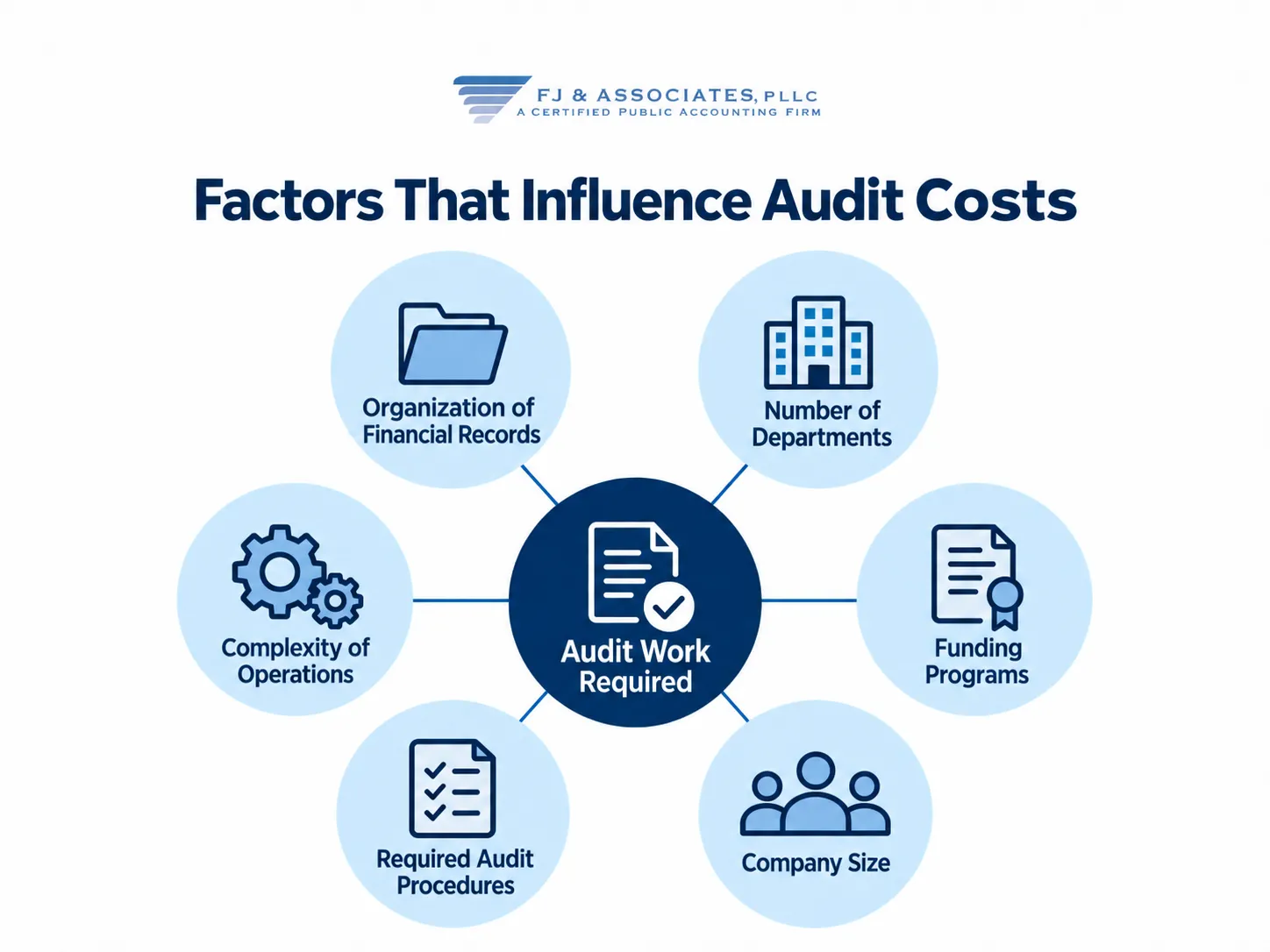
No single factor determines the fee. The combination of these conditions determines how many people, hours, and specialized skills the engagement requires.
Why Nonprofit Audits Can Be More Complex
Nonprofits may need an audit because of grant agreements, government funding, lender requirements, organizational bylaws, state rules, or board and donor expectations. Their accounting may also include restricted resources, multiple programs, contributed support, and compliance obligations that require careful documentation.
The audit requirement and reporting scope should be confirmed early. “We need an audit” can mean different things depending on the funding agreement or governing rule. Clarifying the required engagement before requesting proposals helps an organization compare the right services and avoid a late change in scope.
Disorganized Records Create Avoidable Work
Audit delays often begin before fieldwork. If bank reconciliations are incomplete, schedules do not agree with the general ledger, or supporting documents are difficult to locate, the audit team must pause testing while the organization researches the issue.
Common sources of avoidable work include:
Missing invoices, receipts, contracts, grant agreements, or board minutes
Unreconciled bank, credit-card, payroll, or intercompany accounts
Old outstanding checks and unexplained reconciling items
Transactions recorded inconsistently or in the wrong period
Fixed-asset, debt, lease, or restricted-fund schedules that do not tie to the ledger
Requested information spread across several people without a central coordinator
Major adjustments made after testing has already started
A smaller organization with poor records can require more audit effort than a larger organization with disciplined processes. Organization size matters, but readiness matters too.
How to Prepare for a More Efficient Audit
Preparation should happen throughout the year, not in the week before the auditors arrive. A useful process includes:
Confirm the scope and deadline. Identify who requires the engagement, which period is covered, and what reports must be delivered.
Request the prepared-by-client list early. Assign an owner and due date to every schedule or document.
Close the books before fieldwork. Complete reconciliations, investigate unusual balances, and record known adjustments.
Tie every schedule to the ledger. Differences should be resolved or clearly explained before the file is submitted.
Organize supporting documents consistently. Use clear file names and a secure central location.
Designate one audit coordinator. A primary contact can route questions, prevent duplicate effort, and monitor outstanding requests.
Tell the auditor about changes early. New systems, debt, grants, locations, acquisitions, key employees, or accounting policies may affect planning.
Respond completely and promptly. A partial answer often creates another request and extends the timeline.
An audit-readiness meeting several weeks or months before fieldwork can surface problems while there is still time to resolve them.
Preparation Benefits More Than the Audit Fee
Good preparation may reduce avoidable audit time, but the benefits go further. Management spends less time searching for records, employees face fewer interruptions, and boards or lenders receive completed financial information sooner.
The preparation process can also reveal stale reconciliations, unclear responsibilities, or reporting weaknesses that deserve attention even without an audit. In that sense, audit readiness is part of stronger year-round financial management—not simply an annual compliance exercise.
For organizations in the communities FJ & Associates serves, early coordination can make the difference between an orderly engagement and a stressful deadline. The best time to prepare is before the audit team begins requesting evidence.
Key Takeaways
Audit fees reflect the scope, risk, complexity, and effort required to support the auditor’s opinion.
Revenue or organization size alone does not determine cost.
Complex operations, special reporting requirements, weak controls, and incomplete records can increase audit effort.
Organizations can reduce avoidable work by closing the books, organizing support, and responding promptly.
Confirming the required engagement and preparing throughout the year leads to a smoother process.
Conclusion
An audit is a structured assurance process, not a flat-fee commodity. Some procedures are necessary under applicable professional standards, and some complexity cannot be removed. However, organizations have meaningful control over the quality, organization, and availability of the information the audit team receives.
If an audit is approaching, begin with the scope, the close process, and the prepared-by-client list. Resolving discrepancies before fieldwork is usually far easier than addressing them under deadline pressure.
FJ & Associates can help your business or nonprofit strengthen its accounting processes, clarify audit requirements, and prepare for a more efficient engagement.
FAQ Section
1. What determines the cost of an audit?
Audit costs are generally influenced by the size and complexity of the organization, the amount of work required, and how organized the financial records are before the audit begins.
2. Why do nonprofits often need audits?
Many nonprofits require audits because of grant agreements, lender requirements, government regulations, donor expectations, or organizational policies.
3. Can organized bookkeeping reduce audit costs?
Good bookkeeping and organized financial records can help reduce unnecessary audit work by making information easier to review and verify.
4. Are some audit procedures required regardless of the organization?
Yes. Professional auditing standards require auditors to perform specific procedures before issuing an audit opinion.
5. What should organizations do before an audit?
Complete reconciliations, organize supporting documentation, update accounting records, and prepare requested schedules before fieldwork begins.
6. Does company size automatically determine audit fees?
Not necessarily. Complexity, documentation quality, and overall audit readiness also play significant roles.
7. How far in advance should an organization prepare for an audit?
Preparation should occur throughout the year rather than only a few weeks before the audit begins.
8. Can FJ & Associates help organizations prepare for an audit?
Yes. We help businesses and nonprofit organizations improve accounting processes, organize financial records, and prepare for successful audit engagements.
Author Bio
Missy Dennis, CPA
Partner | FJ & Associates, PLLC | Kaysville, Utah
Missy holds a Master of Accounting degree from the University of Utah and is a licensed Certified Public Accountant.
She is committed to providing clear, accurate, and actionable guidance so clients can navigate complex financial decisions with confidence.
With more than twenty years of public accounting experience, Missy Dennis specializes in:
Tax preparation and tax advisory
Bookkeeping strategy alignment
Estate and trust taxation
Audit and consulting services
Low-income housing tax credits
Non-profit accounting
Small- and mid-sized business advisory

Leave a Reply
You must be logged in to post a comment.